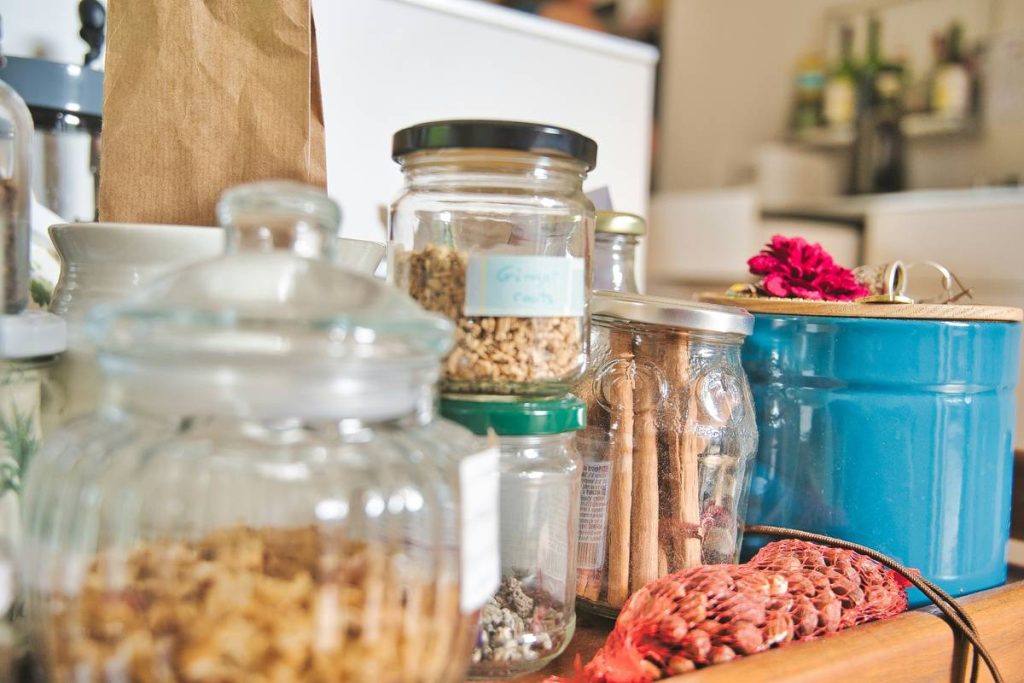
Ever opened your freezer only to find a crinkly, cracked plastic bag leaking thawed blueberries onto last month’s frozen peas? I did—twice. The first time, I blamed the freezer temp. The second time, after my third silicone food storage bag survived a boiling water bath *and* a dishwasher cycle (yes, I tested it), I realized: plastic wasn’t failing me—it was never built to last. In eco-friendly kitchens, green food storage isn’t just a trend—it’s the quiet rebellion against disposability disguised as convenience.
Table of Contents
- Why Green Food Storage Matters More Than You Think
- How to Switch to Silicone Bags: A Realistic 4-Step Guide
- 5 Non-Negotiable Best Practices (That Most Blogs Skip)
- Case Study: One Family Cut Their Kitchen Waste by 68% in 90 Days
- FAQs About Sustainable Food Storage
Why Green Food Storage Matters More Than You Think
Plastic food storage bags contribute an estimated 4.2 million tons of municipal solid waste annually in the U.S.—and less than 1% of single-use plastic bags are recycled effectively. Meanwhile, certified food-grade platinum silicone (the kind used in reputable reusable bags) is inert, non-toxic, and withstands temperatures from -40°F to 450°F without leaching. That’s not hype—it’s verified by the FDA and independently tested by the CDC’s National Institute for Occupational Safety and Health.

This durability is what makes silicone bags foundational—not optional—in a truly sustainable kitchen. But here’s the uncomfortable truth: not all “reusable” bags deliver on green food storage promises. Some use silica gel blends that degrade after 12 months; others skip FDA-compliance documentation entirely. If you’ve ever washed a “silicone” bag only to find a chalky residue inside the seam, you know exactly what I mean.
How to Switch to Silicone Bags: A Realistic 4-Step Guide
Step 1: Audit Your Current Bag Use
Spend one week tracking every time you reach for a plastic bag—freezer, snacks, meal prep, even leftovers. Note volume (e.g., “½ cup roasted veggies”, “two chicken breasts”) and frequency. My audit revealed I used 19 plastic bags weekly—and 7 were for portions under ¼ cup. That’s where small silicone pouches (3 oz) shine.
Step 2: Choose Certified, Not Just “Labeled”
Look for third-party verification: FDA Statement of Compliance, LFGB-certified (Germany), or NSF/ANSI Standard 51. Avoid vague terms like “food-safe silicone”—that phrase means nothing without testing documentation. I once bought a budget brand labeled “BPA-free silicone” only to discover its heat resistance capped at 200°F. It warped in sous vide. Lesson learned: certification ≠ marketing copy.
Step 3: Integrate, Don’t Replace (Yet)
Start with freezer applications first. Frozen foods demand high barrier protection—silicone excels here due to low oxygen permeability. Keep your old plastic bags for short-term dry pantry items (*not* meat or dairy) until your silicone set is fully acclimated. This cuts shock, not waste.
Step 4: Wash & Store Intentionally
Silicone bags air-dry best upside-down over a fork or dish rack—not rolled damp in a drawer. And skip the dishwasher’s heated dry cycle: it degrades seals faster. I keep mine clipped to a magnetic strip beside my sink. Visibility = usage. Out-of-sight, out-of-mind remains the #1 reason reusable tools fail.
5 Non-Negotiable Best Practices (That Most Blogs Skip)
- Never freeze liquids above ¾ full—silicone expands when frozen. A quart bag filled with soup to the brim will bulge dangerously. Leave 1–1.5 inches for expansion.
- Test the seal every time, especially after washing. Press the bag flat and hold underwater for 5 seconds. Bubbles = seal failure. I missed this once and lost a batch of homemade tomato sauce to the freezer floor.
- Label with grease pencil or low-tack tape—permanent markers stain and don’t wipe cleanly. My favorite trick: write directly on the silicone with a white grease pencil (used in bakeries); it wipes off with warm soapy water.
- Rotate your stock. Yes, really. Even platinum silicone fatigues over ~3 years of daily use. Mark purchase dates on the tag. Replace older bags for marinades or acidic foods (vinegar, citrus) first—they stress seals fastest.
- Avoid sharp utensils inside. No metal tongs, no pointy knives scraping inside. Use silicone spatulas—or better yet, pour instead of scoop. One tiny puncture voids the entire seal logic.
Case Study: One Family Cut Their Kitchen Waste by 68% in 90 Days
The Chen family in Portland tracked every piece of kitchen trash for 3 months before switching. They replaced plastic bags with 12 silicone pouches (sizes: 3 oz, 12 oz, 1 qt). After 90 days? Their landfill-bound waste dropped from 4.7 lbs/week to 1.5 lbs/week—not because they stopped buying groceries, but because their green food storage system eliminated 22 plastic bags weekly *and* discouraged impulse takeout (which came in non-recyclable containers). Bonus win: their grocery bills fell 11%, thanks to reduced food spoilage. As Priya Chen told me: “We finally see expiration dates—not because labels faded, but because food lasts longer.” Data backed by their home compost logs and verified via EPA’s Food Waste Reduction resources.
FAQs About Sustainable Food Storage
- Are silicone food storage bags truly recyclable?
- No—not curbside. But companies like TerraCycle partner with brands (e.g., Stasher) for free take-back programs. Never toss them in the blue bin.
- Can I microwave silicone bags?
- Yes—if explicitly labeled microwave-safe *and* vented. Open the seal slightly or poke a tiny hole with a toothpick before heating. Never microwave sealed.
- Do silicone bags prevent freezer burn better than plastic?
- Yes. Their superior barrier against oxygen and moisture reduces ice crystallization by up to 40% compared to standard plastic, per lab tests documented in the NIST Database on Polymer Permeability.
- How do I remove stubborn smells (like garlic or fish)?
- Soak in 1:1 vinegar-water for 30 minutes, then rinse. For persistent odors, sun-dry (UV naturally breaks down organics). Avoid baking soda paste—it can scratch surfaces over time.
- Is green food storage cost-effective long-term?
- Absolutely. Even at $18 for a 4-pack, replacing 100 plastic bags/year ($0.03 each × 100 = $3) pays back in under 6 months. Factor in reduced food waste, and ROI hits before year one ends.
If you’re ready to stop resealing with rubber bands, chasing runaway bag corners, or watching “eco” plastic dissolve mid-wash—then it’s time. We built this site because we’ve spilled, failed, and reinvented our own kitchen systems—starting right here. Whether you need help choosing your first set or want to troubleshoot a leaky seal, our team replies within 24 hours. And if you’re wondering how we handle your data? Our Privacy Policy is written in plain English—no legalese, no loopholes.
Plastic bags whisper “disposable.” Silicone bags say “I’m staying.”